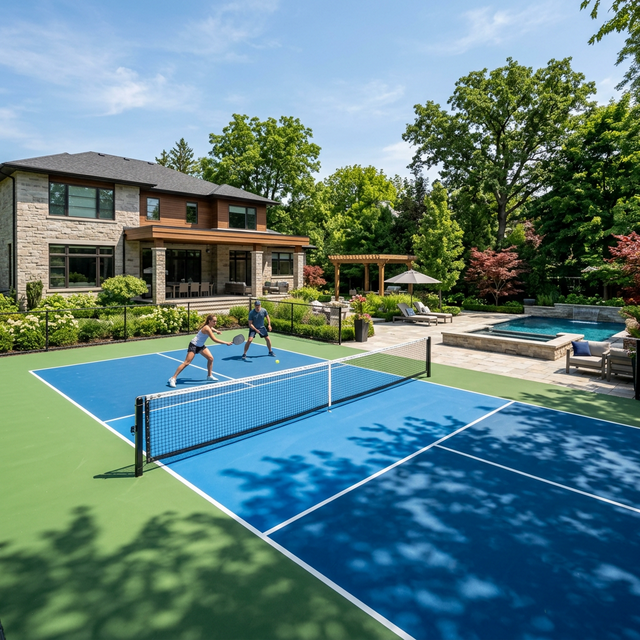
Imagine stepping out your back door and playing pickleball whenever you want — no driving to the community center, no waiting for courts, no membership fees. Building a home pickleball court is more achievable (and more affordable) than you might think.
In this step-by-step guide, we’ll cover everything from measuring your space and choosing a surface to selecting the right net system and accessories. By the end, you’ll have a clear plan for building a court that’s as close to tournament-standard as your space allows.
Do You Have Enough Space?
A regulation pickleball court measures 20 feet wide × 44 feet long. But you’ll want buffer zone around the court for safety and playability:
- Minimum recommended: 30 × 54 feet (the court plus 5 feet on each side and end)
- Ideal with overrun: 34 × 64 feet (the USAPA recommended total playing area)
Don’t have that much space? You can still play:
- A shortened court (30 × 50 feet total) works well for casual games
- Even a two-car driveway (~20 × 40 feet) can accommodate modified play
- Some players set up half-courts for drilling and practice
Pro tip: Use a tape measure and chalk to mark the full court dimensions in your space before committing to any construction. Live with it for a weekend and see how it feels.
Step 1: Choose Your Surface
The playing surface is the biggest decision you’ll make. Here are your options ranked from most to least expensive:
Dedicated Sport Court Tiles
Cost: $4,000–$15,000
Pros: Purpose-built for pickleball with built-in cushioning, low maintenance, consistent ball bounce
Cons: Most expensive option, may require professional installation
Concrete or Asphalt
Cost: $3,000–$8,000 (new pour)
Pros: Durable, consistent surface, can be painted with sport court lines
Cons: Hard on joints, requires proper drainage and leveling
Existing Driveway or Patio
Cost: $0–$500 (just lines and a net)
Pros: No construction needed, cheapest option
Cons: May have cracks or uneven surfaces, limited size
Compacted Gravel or Grass
Cost: $0–$200
Pros: Natural surface, easy to set up
Cons: Uneven bounce, limited in wet weather, balls get dirty
For most home players, the existing driveway or patio option is the best starting point. You can always upgrade the surface later if you catch the pickleball bug (and you will).
Step 2: Mark Your Court Lines
Accurate lines make a massive difference in gameplay quality. Here are your options:
Temporary Lines
- Painter’s tape — cheap, removable, but doesn’t last through rain
- Sidewalk chalk — fun for kids, needs frequent re-application
- Temporary court line kits — adhesive strips designed for sport courts
Semi-Permanent Lines
- Outdoor court paint — latex-based sport court paint with stencils
- Court line tape — heavy-duty vinyl tape that withstands weather
Key Measurements to Mark
| Line | Distance |
|---|---|
| Court width | 20 feet |
| Court length | 44 feet |
| Net position | 22 feet from each baseline (center of court) |
| Non-volley zone (kitchen) | 7 feet from the net on each side |
| Service area width | 10 feet (each half of the court) |
| Service area depth | 15 feet (from kitchen line to baseline) |
Step 3: Install the Net
The net is the centerpiece of your home court. For a permanent or semi-permanent setup, you have two options:
Option A: Portable Net (Recommended for Most People)
This is the best choice if you share your driveway or patio with other activities (like parking cars). A good portable net sets up in minutes and stores compactly.
The Vermont ProCourt Portable Pickleball Net from Net World Sports is a top choice for home courts because:
- Full 22-foot regulation width
- Sets up in under 5 minutes with snap-fit poles
- Heavy-duty steel frame that doesn’t wobble
- Includes center strap for proper height adjustment
- Comes with a carrying bag for easy storage
Option B: Permanent Post System
If you’re building a dedicated court that won’t serve double duty, Net World Sports also offers professional-grade post and net packages with heavy-duty steel posts that can be permanently installed in the ground. These are the same systems used in clubs and schools.
Step 4: Add Court Accessories
Once your basic court is set up, these additions will elevate your home playing experience:
Ball Hopper
A ball hopper holds 40+ pickleballs and saves your back during practice sessions. Just roll it across the court to pick up scattered balls.
Wind Screens
If your court is exposed to wind, backdrop screens attached to a fence or portable posts will dramatically improve play quality and keep balls from flying into the neighbor’s yard.
Storage Solution
Keep your paddles, balls, and net components organized and protected from weather. A waterproof outdoor storage box near the court works perfectly.
Lighting
If you want to play after sunset, LED floodlights or string lights can extend your playing time. Aim for at least 30 foot-candles of illumination for comfortable play.
Step 5: Stock Up on Equipment
With your court ready, you’ll need the actual playing equipment. Here’s what to keep on hand:
Paddles
Keep at least 4 paddles available — two for you and two for guests. Net World Sports’ Vermont paddle range covers everything from affordable wooden paddles (great for lending to beginners) to competition-grade composite paddles for serious players.
Balls
Stock both indoor and outdoor balls. Outdoor balls last longer on rough surfaces but crack faster in cold weather. Keep a dozen on hand — you’ll lose a few over the fence. The Vermont Pickleball Balls are USAPA-approved, so you’re practicing with tournament-standard equipment.
Extras
Consider having a few extra grips, a small first-aid kit (blisters happen), and water bottles nearby.
Cost Breakdown: Building a Home Pickleball Court
Here’s what a realistic budget looks like at three levels:
Budget Setup (~$150–$300)
- Portable net: ~$100–$150
- Court marking tape: ~$20
- 2 paddle set + balls: ~$40–$80
- Use existing driveway/patio surface
Mid-Range Setup (~$800–$2,000)
- Quality portable net: ~$150–$250
- Sport court paint + stencils: ~$100–$200
- 4 composite paddles: ~$200–$400
- Ball hopper + storage: ~$50–$100
- Court accessories: ~$100–$200
Premium Setup (~$5,000–$15,000+)
- Dedicated sport court surface: ~$4,000–$12,000
- Permanent post system: ~$300–$800
- Professional lighting: ~$500–$1,500
- Wind screens: ~$200–$500
- Premium paddle + ball collection: ~$500+
For most families, the budget setup using an existing flat surface is the perfect starting point. You can get a complete starter package from Net World Sports that covers the net, paddles, and balls — basically everything you need to start playing immediately.
Maintenance Tips for Your Home Court
Surface Care
- Sweep regularly to remove debris, leaves, and dirt
- Power-wash concrete or asphalt courts twice a year
- Repair cracks promptly — they’ll get worse with freeze/thaw cycles
- Re-paint lines annually if using sport court paint
Net Care
- Remove portable nets during severe weather (high winds, hail, heavy snow)
- Dry the net before storing to prevent mildew
- Check pole connections monthly and tighten as needed
- Replace the net when mesh becomes stretched or torn
Equipment Care
- Store paddles indoors (extreme temperatures can warp composite faces)
- Replace balls when they develop cracks or lose roundness
- Re-grip paddles every few months if you play frequently
Is a Home Pickleball Court Worth It?
Absolutely. Here’s the math:
- Average court rental or membership: $10–$25 per session
- 3 sessions per week = $1,500–$4,000 per year
- A budget home court setup: $150–$300 (one-time cost)
Your home court pays for itself within the first month if you play regularly. Plus, there’s the convenience factor — no driving, no scheduling, no waiting for courts.
Final Thoughts
Building a home pickleball court is one of the best investments you can make in your game and your family’s recreation. Start simple with a portable net and temporary lines on your existing driveway, then upgrade as your commitment grows.
For high-quality, regulation equipment at fair prices, Net World Sports is our go-to recommendation. Their Vermont pickleball line covers everything from nets to paddles to balls, and their equipment consistently meets IFP and USAPA standards — so you’re building good habits from day one.
Ready to build your home court? Shop pickleball equipment at Net World Sports →