Understanding the Forehand
The forehand is arguably the most crucial shot in your pickleball arsenal. Mastering this technique can elevate your game from beginner to advanced. Let’s break down the perfect forehand form!
Key Components of a Perfect Forehand
1. Stance
- Feet shoulder-width apart: This gives you a solid base.
- Knees slightly bent: Maintain balance and readiness.
- Weight distribution: Shift your weight onto your back foot before the swing.
2. Grip
- Use the Eastern or Continental Grip for versatility.
- Hold the paddle firmly but not too tight; you need flexibility.
3. Paddle Position
- Start with the paddle at waist height.
- Keep the paddle face slightly open to ensure proper ball contact.
4. Swing Mechanics
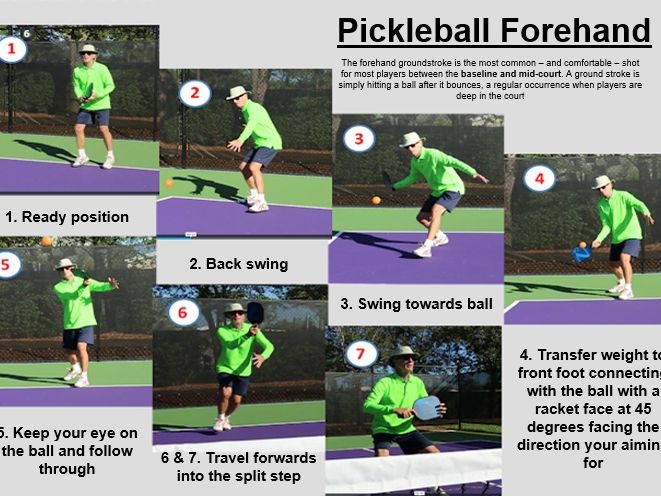
- Backswing: Rotate your shoulders and bring the paddle back.
- Forward swing: Step into the shot, shifting your weight to your front foot.
- Follow through: Finish high, with the paddle above your shoulder.
5. Eye on the Ball
- Keep your eyes focused on the ball until contact.
- Track the ball’s trajectory to anticipate its bounce.
Drills to Perfect Your Forehand
1. Shadow Swinging
- Practice your swing without a ball to focus on form.
2. Wall Rally
- Hit the ball against a wall to develop consistency.
- Vary your speed and angle to simulate real play.
3. Partner Drills
- Work with a partner to practice forehand-to-forehand exchanges.
- Focus on accuracy and positioning.
Common Mistakes to Avoid
- Over-swinging: Keep your swings controlled.
- Incorrect grip: Ensure you’re using the right grip for your style.
- Poor footwork: Always position your feet correctly before hitting the ball.
Gear Recommendations
When looking for the right paddle for your forehand, consider:
– Weight: A medium paddle (7.5 – 8.5 oz) offers a good balance of control and power.
– Face Material: Choose a composite face for better ball control.
– Core Thickness: A thicker core (around 25mm) provides more power and better ball response.
Check out options like Selkirk or Joola on Amazon for high-quality paddles that can enhance your game!
Conclusion
Mastering the forehand in pickleball is a game-changer. By implementing the techniques and drills outlined in this guide, you’ll see significant improvements in your gameplay. Remember, practice makes perfect!
“The only way to get better is to keep practicing and refining your technique.”
Ready to upgrade your game?
Browse top-rated pickleball gear with free delivery on eligible orders.
Frequently Asked Questions
Q1: How long does it take to master the forehand?
A: With consistent practice, you can see improvement in just a few weeks.
Q2: What are the best paddles for beginners?
A: Look for paddles that are lightweight and have a good grip, such as those from Selkirk or Joola.
Q3: Can I use a tennis racket for pickleball?
A: While you can, it’s recommended to use a paddle designed for pickleball for optimal performance.
Q4: How should I practice if I don’t have a partner?
A: Utilize wall drills and shadow swings to refine your technique.
Q5: What should I focus on during practice?
A: Concentrate on your stance, grip, and follow-through for the most effective training.