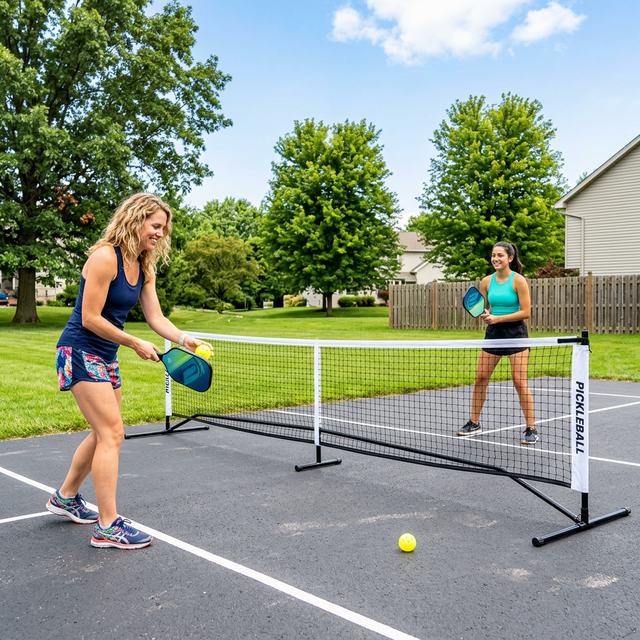
Setting up a pickleball court wherever you go has never been easier. Whether you’re turning your driveway into a practice zone, taking the game to a family reunion, or looking for a tournament-grade net for your local club, a portable pickleball net is the single most important piece of equipment to get right.
After testing dozens of options, we’ve found that Net World Sports offers some of the most reliable and well-built portable nets on the market — particularly their Vermont ProCourt line, which meets official IFP (International Federation of Pickleball) match regulations.
In this guide, we’ll break down everything you need to know about choosing the right portable net for your needs.
Why You Need a Portable Pickleball Net
Most recreational players don’t have access to a dedicated pickleball court. Even if you play at a local rec center, you’ve probably waited in line for a court during peak hours. A portable net solves this problem instantly.
Here’s why every serious pickleball player should own one:
- Play anywhere — driveways, parking lots, parks, gymnasiums, even the beach
- No booking required — skip the court reservation hassle
- Easy setup — most quality nets assemble in under 5 minutes
- Practice on your schedule — perfect for drilling shots after work
- Great for events — set up multiple courts for family gatherings or tournaments
What to Look for in a Portable Pickleball Net
1. Regulation Dimensions
A proper pickleball net should measure 22 feet wide and 36 inches tall at the sidelines, dipping to 34 inches at the center. This is the official standard set by USA Pickleball (USAPA) and the IFP.
Any net that doesn’t meet these specs will mess with your game when you transition to a real court. Always check the specifications before buying.
2. Frame Material and Durability
The best portable nets use powder-coated steel or heavy-duty aluminum frames. Steel is heavier but more stable in wind. Aluminum is lighter for travel but may flex under tension.
Look for thick-gauge tubing (at least 1.5 inches diameter) and reinforced corner joints. Cheap nets often fail at the joints first.
3. Net Material
High-quality nets use polyester mesh or PE (polyethylene) netting with reinforced edges and a thick top band. The mesh should be tight enough that the ball doesn’t pass through, with a headband that maintains consistent height.
4. Portability and Setup Time
The best portable nets come with a carrying bag and can be set up by one person. Friction-fit or snap-together poles work best — avoid nets that require tools for assembly.
5. Stability
Wind is a portable net’s worst enemy. Look for models with weighted bases, ground stakes, or wide-stance legs that keep the net from tipping over during play.
Our Top Pick: Vermont ProCourt Portable Pickleball Net
After comparing dozens of options, the Vermont ProCourt Portable Pickleball Net from Net World Sports stands out for several reasons:
- Official 22ft regulation width — meets IFP and USAPA match standards
- Heavy-duty steel frame — won’t flex or wobble during aggressive rallies
- Quick-snap assembly — sets up in under 5 minutes, no tools needed
- Premium PE netting — tight weave with reinforced edges for long-term durability
- Includes carrying bag — easy to transport to the park, gym, or a friend’s house
- Center strap included — ensures the regulation 34-inch center height
What makes Net World Sports stand apart from Amazon no-name brands is their background in professional sports equipment. They supply nets and training gear to clubs and schools across the UK, Europe, and North America, so their quality standards are genuinely higher than most direct-to-consumer brands.
How to Set Up Your Backyard Pickleball Court
Once you have your net, here’s how to create a proper court anywhere:
Step 1: Find a Flat Surface
A standard pickleball court measures 20 × 44 feet. You’ll need at least 30 × 54 feet of clear space to allow for overruns. Smooth concrete or asphalt works best, but packed grass or even hard-packed dirt will do in a pinch.
Step 2: Mark the Court Lines
Use sidewalk chalk, painter’s tape, or temporary court line kits. Mark the baseline, sidelines, non-volley zone (the “kitchen” — 7 feet from each side of the net), and service areas.
Step 3: Set Up the Net
Position your net at the center of the 44-foot length. The Vermont ProCourt net’s center strap makes it easy to dial in the regulation 34-inch center height.
Step 4: Gather Your Gear
You’ll need paddles, outdoor pickleballs (with 40 holes for outdoor play), and comfortable court shoes. Net World Sports also offers complete pickleball equipment sets if you’re starting from scratch.
Portable Net Maintenance Tips
To get the most life out of your net:
- Store it dry — always let the net and frame dry before packing up
- Check the joints — tighten any loose connections before each use
- Avoid dragging — lift the assembled frame rather than sliding it
- Clean the net — a quick hose-down removes dirt and prevents mildew
- Use the carrying bag — protects against scratches during transport
Final Thoughts
A quality portable net transforms any flat surface into a pickleball court. The Vermont ProCourt from Net World Sports hits the sweet spot of regulation specs, solid construction, and true portability — all at a competitive price point.
Whether you’re a beginner setting up your first backyard court or a competitive player who travels to tournaments, investing in a proper net is the foundation of better practice and more playing time.
Ready to play anywhere? Check out Net World Sports’ full pickleball equipment range →